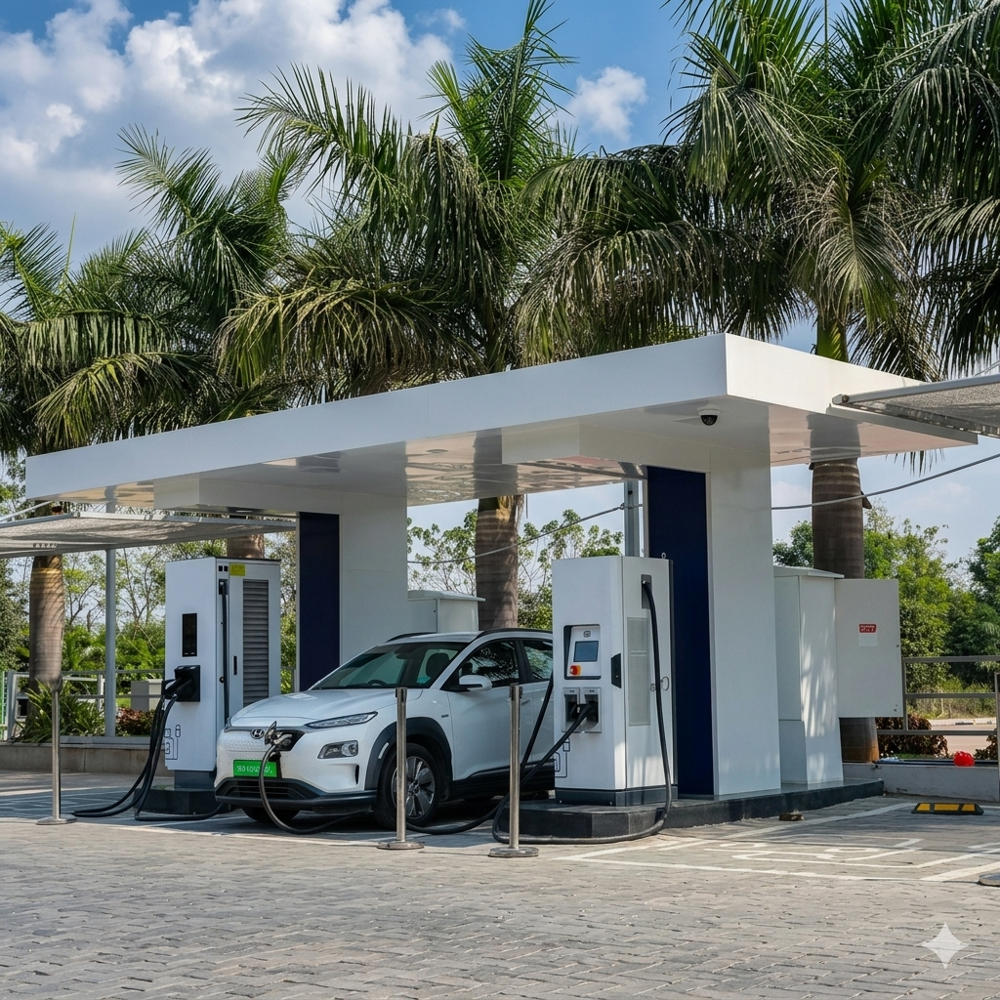
How to Start an EV Charging Station Business in India: A Complete Guide for 2026
India’s electric mobility revolution is accelerating rapidly. With increasing environmental awareness, supportive government initiatives, and a growing number of electric vehicles on the road, the demand for EV charging infrastructure is rising significantly.
Automobile manufacturers are launching new EV models every year, while consumers are actively shifting toward cleaner transportation options. This transformation has created a strong business opportunity for entrepreneurs and investors looking to enter the EV charging station industry.
If you are planning to explore this growing sector, this guide explains everything you need to know about setting up an EV charging station business in India.
Understanding EV Charging Infrastructure in India
The EV charging ecosystem in India has become more business-friendly in recent years. The Ministry of Power has de-licensed EV charging operations, which means entrepreneurs generally do not require a separate license to establish charging stations.
However, operators must comply with the technical and safety standards prescribed by the Central Electricity Authority (CEA).
The EV charging infrastructure market in India is broadly divided into three categories:
1. Home Charging
Private charging units installed in residential properties for personal vehicle charging.
2. Captive Charging
Charging systems developed for internal commercial fleets such as logistics, delivery, or transportation companies.
3. Public Charging Stations (PCS)
Commercial charging stations accessible to all EV users. Customers pay to charge their vehicles, making this the most attractive model for investors and entrepreneurs.
Types of EV Chargers
Before estimating investment requirements, it is important to understand the different charger categories available in the market.
EV chargers are mainly classified into two categories:
AC Chargers (Slow to Moderate Charging)
AC chargers are comparatively affordable and suitable for locations where vehicles remain parked for extended durations.
These chargers rely on the vehicle’s onboard system to convert AC power into DC power for battery charging.
Best suited for:
- Residential societies
- Office parking spaces
- Shopping malls
- Hotels
Typical charging duration:
6 to 10 hours depending on battery size and charger capacity.
DC Chargers (Fast Charging)
DC fast chargers directly supply power to the EV battery, bypassing the vehicle’s onboard converter. This enables significantly faster charging speeds.
Best suited for:
- Highways
- Commercial charging hubs
- Petrol pumps
- Fleet operations
Typical charging duration:
20 to 90 minutes depending on charger capacity.
EV Charging Standards Comparison
| Charger Type | Power Output | Approximate Charging Time | Ideal Use Case |
| Level 1 (AC) | 3.3 kW | 8–12 Hours | Home charging |
| Level 2 (AC) | 7.2 kW – 22 kW | 3–5 Hours | Apartments, offices, malls |
| DC Fast Charger | 15 kW – 60 kW | 45–90 Minutes | Public charging stations |
| DC Ultra-Fast Charger | 100 kW – 240 kW | 15–30 Minutes | Highways and fleet hubs |
Important Note:
While Bharat AC-001 and DC-001 standards were introduced initially for low-voltage EVs, CCS2 has now become the preferred standard for modern electric cars in India.
Popular Business Models for EV Charging Stations
Investors can choose from different operational models based on their investment capacity and involvement level.
1. Company-Owned, Company-Operated (COCO)
Under this model, a charging network operator owns and manages the entire station while leasing land from property owners.
Suitable for:
- Landowners seeking fixed rental income
- Investors preferring minimal operational involvement
2. Franchise-Owned, Franchise-Operated (FOFO)
In this structure, the investor funds the infrastructure, equipment, and setup while partnering with a charging network provider for branding and technical support.
Advantages:
- Greater operational control
- Higher revenue retention
- Brand support and software integration
3. Franchise-Owned, Company-Operated (FOCO)
This model is ideal for investors seeking passive income opportunities.
The investor finances the setup, while the charging operator manages:
- Daily operations
- Maintenance
- Marketing
- Customer support
Revenue is generally shared between both parties.
Investment Required to Start an EV Charging Station in India
One of the most common questions entrepreneurs ask is:
“How much investment is needed to start an EV charging station?”
The total setup cost depends on:
- Charger type
- Number of charging points
- Electrical infrastructure
- Location
- Civil construction requirements
EV Charging Equipment Costs
AC Chargers
A standard Type-2 AC charger generally costs between:
₹35,000 to ₹1.5 Lakhs
depending on power capacity and features.
DC Fast Chargers
DC fast chargers are more expensive due to higher power requirements.
Estimated cost:
- 30 kW to 60 kW chargers: ₹8 Lakhs to ₹15 Lakhs
- Ultra-fast chargers (150 kW+): ₹25 Lakhs or more
Infrastructure and Grid Upgrade Costs
Apart from charging equipment, additional infrastructure expenses include:
Electricity Connection and Transformer
If higher electrical load is required, a dedicated transformer may be necessary.
Estimated cost:
₹2 Lakhs to ₹5 Lakhs
Civil Construction
Includes:
- Flooring
- Safety barriers
- Canopy installation
- Signage and branding
Estimated cost:
₹1 Lakh to ₹3 Lakhs
Charging Management Software
Charging stations require software for:
- Billing
- Monitoring
- User management
- Payment integration
Subscription cost:
₹500 to ₹1,000 per charger per month
Estimated Total Investment
Small AC Charging Setup
(2 AC chargers)
Estimated investment:
₹2 Lakhs to ₹4 Lakhs
Commercial Fast Charging Station
(1 DC fast charger + 1 AC charger)
Estimated investment:
₹15 Lakhs to ₹25 Lakhs
Step-by-Step Process to Set Up an EV Charging Station
Step 1: Select the Right Location
Choose locations with high vehicle movement and parking demand such as:
- Highways
- Commercial complexes
- Residential communities
- Restaurants
- Petrol pumps
Step 2: Conduct a Feasibility Assessment
Evaluate:
- Existing grid capacity
- Availability of a three-phase electricity connection
- Need for transformer installation
Step 3: Choose the Right Technology Partner
Partner with a reliable EV charging equipment manufacturer or charging network provider with strong technical support capabilities.
Step 4: Apply for Electricity Connection
Submit the necessary application to the local electricity distribution company (DISCOM) for load approval and meter installation.
Step 5: Complete Civil and Electrical Work
Prepare the site with:
- Concrete foundations
- Wiring
- Safety equipment
- Canopy structures
Step 6: Integrate Charging Software
Install a charging management system (CMS) that enables:
- Digital payments
- Real-time monitoring
- Remote management
- User access through mobile applications
Step 7: Launch Operations
After successful testing and safety inspection, the charging station becomes operational for public use.
Why the EV Charging Business Has Strong Potential in India
India’s EV ecosystem is still in the early growth stage, creating substantial opportunities for businesses entering the market today.
Several factors are driving future growth:
- Government incentives for EV adoption
- Rising fuel prices
- Expansion of electric vehicle manufacturing
- Increasing environmental awareness
- Growing consumer demand for charging accessibility
As EV adoption increases, charging infrastructure will become one of the most critical components of India’s transportation ecosystem.
Final Thoughts
The EV charging station business in India presents a strong long-term opportunity for entrepreneurs and investors looking to participate in the country’s clean energy transition.
Whether you choose a franchise model, independent operation, or passive investment approach, the market offers multiple pathways for growth.
With the right location, reliable infrastructure, and strategic planning, EV charging stations can become a scalable and future-ready business venture.
If you are planning to launch or expand your EV charging infrastructure business, exploring smart green financing solutions through MyFinWork can help simplify your investment journey.
FAQs
1. How much does it cost to set up an EV charging station in India?
A small AC charging setup may require ₹2 Lakhs to ₹4 Lakhs, while a commercial DC fast charging station can cost ₹15 Lakhs to ₹25 Lakhs or more.
2. Is the EV charging station business profitable?
Yes, the business has strong long-term profitability potential, especially in high-traffic locations with growing EV adoption.
3. How long does installation take?
Physical installation usually takes a few days, but electricity approvals and load sanctions may take 1 to 3 months.
4. Is a license required to open an EV charging station?
Generally, no special central license is required. Operators mainly need electricity approvals and compliance with safety standards.
5. Which locations are best for EV charging stations?
Highways, malls, residential societies, office complexes, petrol pumps, and commercial hubs are considered ideal locations.